 +86 150 0573 0099
 alily@alilyenergy.com


To choose the right solar panel manufacturer for bulk orders and EPC projects, compare manufacturing capacity, module quality, BIS and other applicable certifications, minimum order quantity (MOQ), delivery timelines, warranty terms and verified project experience. The best supplier is one that meets your technical requirements, delivers on schedule and offers reliable long-term support—not simply the lowest price per watt.
In this article, we explain how to evaluate Solar Panel Manufacturers, compare bulk order costs, understand OEM manufacturing options and select a supplier that fits your project requirements.
1. Start With the Manufacturer, Not the Quotation
Two suppliers may quote different prices for what appears to be the same solar panel. Before comparing those numbers, find out who is actually manufacturing the product.
Some companies operate their own manufacturing facilities, while others source modules from third-party factories. Neither model is automatically better, but you should know who controls production, quality and warranty commitments.
Annual manufacturing capacity is a useful starting point. For example, a manufacturer with a stated capacity of 2–10 GW per year may be worth evaluating for large procurement requirements. However, annual capacity does not tell you how much production is available for your order.
Ask about the specific factory, available production slots and experience with projects similar to yours.
BloombergNEF Tier 1 status can also be relevant when evaluating supplier bankability, particularly for financed solar projects. However, it is not a product quality certification. A Tier 1 label should not replace technical checks, certification reviews or an assessment of the manufacturer’s financial and warranty arrangements.
The real question is simple: can this supplier fulfil your project requirements consistently, with the documentation and support your business needs?
2. Check Certifications Before Shortlisting the Modules
Certification is not paperwork to collect after the commercial negotiations. It can determine whether the selected modules are eligible for your project in the first place.
For solar projects in India, check the applicable BIS registration and MNRE requirements. Where relevant, verify the current Approved List of Models and Manufacturers (ALMM) status against the exact product and project requirements.
International buyers should also review the relevant IEC test reports and TÜV certification documents, where applicable.
Pay attention to the actual module model and manufacturing details covered by each document. A certificate for one product should not be assumed to cover every module offered by the same company.
For EPC contractors, this check is particularly important when working on government tenders or projects with specific compliance conditions.
Official reference: MNRE Approved List of Models and Manufacturers.
3. Compare the Technical Specifications, Not Just the Wattage
A 550 W Solar Panel is not automatically a better choice than a lower-wattage module. The right option depends on the project design, available installation area, inverter compatibility and overall system economics.
Start with the module datasheet. Look at power rating, efficiency, dimensions, weight, temperature coefficient and electrical characteristics. These specifications affect how the panels fit into the project and perform under actual operating conditions.
Technology matters, too. Mono PERC, TOPCon and HJT modules have different performance characteristics, costs and market availability. Your decision should reflect the project’s technical and commercial requirements rather than the popularity of a particular technology.
For an EPC project, check the following before approving a module:
- Rated power, efficiency and power tolerance
- Open-circuit voltage and short-circuit current
- Maximum-power voltage and current
- Temperature coefficient and mechanical load ratings
- Module dimensions and compatibility with the proposed system
- Product traceability and approved technical documentation
One overlooked specification can create problems later. For instance, a module substitution may affect string sizing, inverter compatibility or the number of modules required. Get technical approval before accepting a change to the agreed product.
4. Work Out the MOQ and Delivery Schedule Early
Minimum order quantity (MOQ) can influence both pricing and project planning. Some suppliers accept smaller pallet orders, while others require a full container. The quantity also depends on the module dimensions and packaging arrangement.
Alily Energy’s stated starting point for bulk orders is one container. Buyers should confirm the quantity per container, available module models and commercial terms for their requirements.
Delivery deserves the same attention. An indicative lead time of 15–45 days for orders up to 10 MW has been provided for Alily Energy’s supply discussions. Before using this timeline in a project schedule, clarify whether it covers production, dispatch or delivery to the destination.
That distinction matters. A factory dispatch date is not the same as the date panels arrive at your project site.
For large orders, agree on the delivery schedule, shipment quantities, destination, packaging and applicable shipping terms in writing. If the installation is planned in phases, staged deliveries may be more practical than receiving the entire order at once.
The cheapest quotation becomes less attractive if the modules arrive after the installation team is scheduled to begin work.
5. Understand What the Warranty Actually Guarantees
Solar panels are expected to operate for decades, so warranty terms deserve more attention than the headline warranty period.
A product warranty generally covers specified defects in materials or workmanship. A performance warranty sets out the minimum power output guaranteed over a stated period. These are different commitments, and buyers should review both.
Alily Energy has provided a 30-year limited power output warranty figure for consideration. The applicable product warranty must be checked to establish its exact coverage and conditions.
The stated 80% output figure also needs to be interpreted correctly. If a module’s warranty guarantees at least 80% of its original rated power after 30 years, that means it retains 80% of the original rating under the warranty’s terms. It does not mean the module loses 80% of its power.
Do not confuse end-of-period guaranteed output with the annual degradation rate. They are related measures, but they are not interchangeable.
Before signing a purchase order, understand who provides the warranty, how claims are handled, what exclusions apply and what remedy is available if a module fails to meet its guarantee. A long warranty is only as useful as the terms behind it.
6. When Should You Consider an OEM Solar Manufacturer?
Not every buyer wants to sell panels under the manufacturer’s brand. Distributors, wholesalers and energy businesses may prefer to develop their own solar brand.
This is where an OEM Solar Manufacturer can be relevant. Depending on the supplier’s capabilities, an OEM arrangement may include manufacturing to an agreed specification, private-label branding and customised packaging.
The advantage is that a business can explore its own branded product range without building a complete manufacturing facility. However, OEM arrangements differ, so the commercial and technical responsibilities need to be clear from the beginning.
Before choosing an OEM partner, discuss:
- Available module technologies and power ratings
- Branding, labelling and packaging options
- Minimum order quantity and production timelines
- Quality approval and certification responsibilities
- Product traceability and warranty ownership
- Pricing, payment terms and after-sales support
For Alily Energy OEM enquiries, buyers should share their target market, required specifications, expected order volume and branding needs. The available customisation options and applicable certification arrangements should then be established for the proposed order.
An OEM supplier should be evaluated with the same care as a conventional module supplier. Your brand’s reputation will ultimately depend on the product delivered to your customers.
7. Compare the Total Cost, Not Only the Price Per Watt
A lower module price does not necessarily mean a lower project cost. Freight, insurance, packaging, taxes, payment terms and delivery arrangements can change the final amount substantially.
When comparing two quotations, make sure both suppliers are quoting for the same module specification, quantity and delivery destination.
|
Factor |
What to compare |
|
Module price |
Price per watt and total order value |
|
Logistics |
Freight, insurance and destination charges |
|
Compliance |
Required registrations and documentation |
|
Delivery |
Agreed schedule and shipment terms |
|
Warranty |
Coverage, duration and claim process |
|
Payment |
Advance, balance and milestone terms |
For international orders, also clarify the agreed Incoterms, currency and customs responsibilities.
EPC contractors should consider schedule risk alongside purchase price. If a delivery delay affects installation or commissioning, the financial impact may be greater than the initial saving on modules.
A fair comparison looks at the total delivered cost and the supplier’s ability to meet the project’s requirements.
8. A Practical Way to Make the Final Decision
Once you have shortlisted two or three manufacturers, compare them against a single project specification. This prevents a supplier from appearing cheaper simply because it has quoted a different module, delivery arrangement or warranty.
Before placing the order, make sure you have:
- The approved module datasheet and exact model number
- Applicable certification and compliance documents
- Confirmed quantity, MOQ and production allocation
- A written delivery schedule
- Product and performance warranty documents
- Comparable quotations and agreed commercial terms
- A clear process for inspection, acceptance and warranty claims
If a supplier cannot provide a clear answer on a critical requirement, resolve it before issuing the purchase order. This is easier than dealing with a specification dispute after the shipment arrives.
Alily Energy Projects Delivered Globally:
Any manufacturer can say it has experience. A better test is what it has actually built, where, and at what scale. Here are three Alily Energy projects delivered across the world. Use them as a reference when you ask any supplier, including us, for project proof.
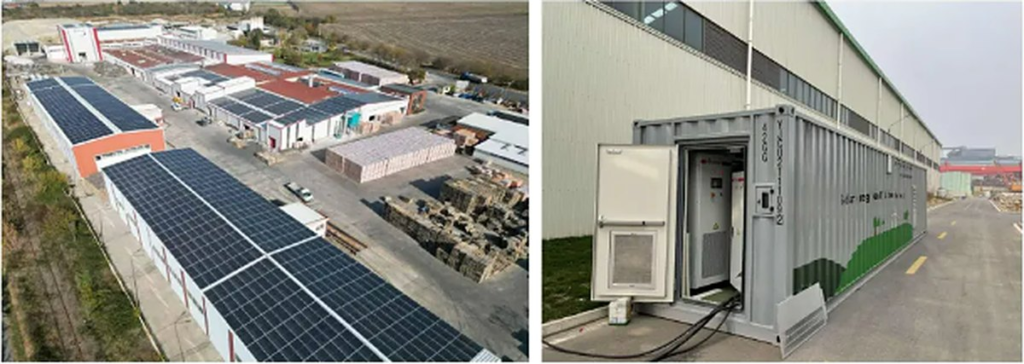
Solar and battery storage, Germany
This industrial site in Germany runs a 108 kWp solar PV system with a 100 kW power conversion system and 216 kWh of battery storage, installed in March 2021. The rooftop panels generate power on site, and the battery lets the business use more of that solar power itself.
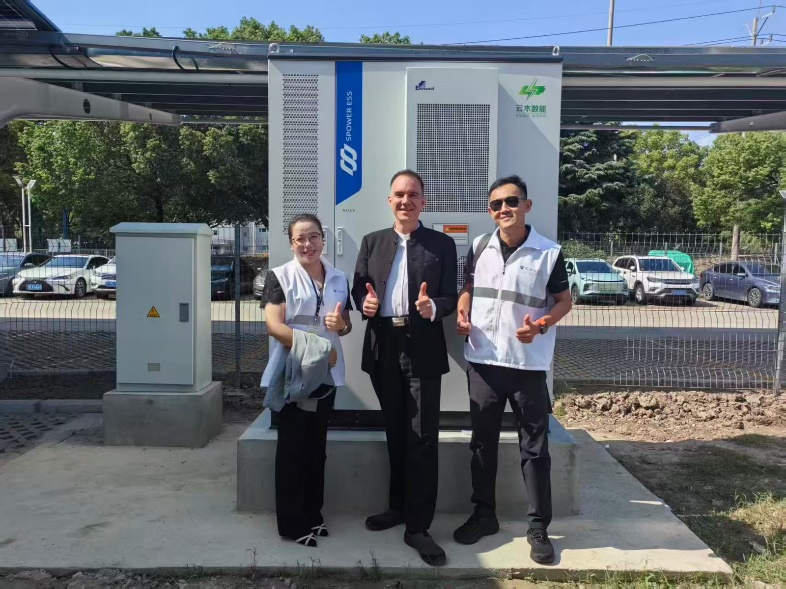
Solar carport with EV charging, China
Completed in October 2026, this project covers a car parking area with solar panels. The numbers:
- Solar panel area:682 m²
- Daily generation:450 kWh
- CO₂ reduction:98 tonnes per year
- Annual savings:CNY 93,000
- Charging supported:400 e-bicycles and 10 e-cars
It uses space that would otherwise only provide parking, and the power goes directly to charging.
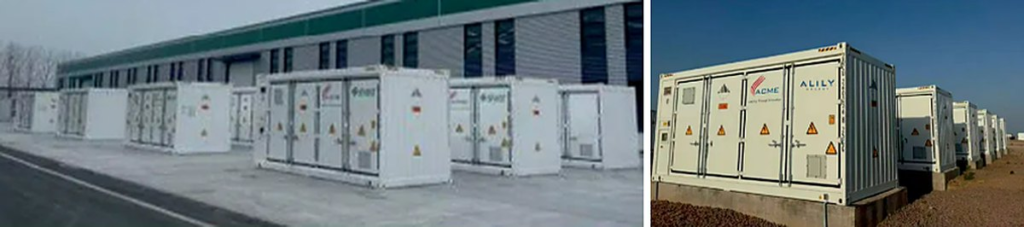
2000 MWh+ battery energy storage, India
This is our largest storage project. It uses 5.015 MWh battery containers with 5 MW PCS MV skids and an energy management system. The scope also includes a Capacity & Maintenance Agreement, a 15-year Long Term Service Agreement, a performance warranty, and lifecycle spare parts and site service.
The system supports grid-connected and autonomous island operation, LVRT/HVRT, reactive power support, PV and load fluctuation smoothing, active grid support and source transfer.
What to ask any supplier about project references
A good reference tells you more than a photo does. Ask for:
- The project location and installed capacity
- What the supplier actually did: supply, installation, commissioning or service
- The equipment used (module, inverter or battery model)
- The completion date and how long it has been operating
- Documents or a contact you can verify
We are happy to share these details for the projects above. If you are planning something similar, send us your capacity, location and application, and we will point you to the closest reference.
Why Consider Alily Energy for Bulk Solar Panel Supply?
For EPC contractors, project developers, distributors and businesses exploring OEM supply, Alily Energy offers an opportunity to discuss solar module requirements based on the intended application and order size.
The information available for initial discussions includes a one-container starting MOQ, an indicative lead time of around 15–45 days for orders up to 10 MW, and a stated 30-year limited power output warranty. The precise terms, product availability and applicable documentation should be confirmed for the selected module.
When contacting Alily Energy, share your required capacity, module technology, destination, delivery schedule and project type. For OEM enquiries, include your branding requirements and expected order volume.
This gives the team a clearer basis for discussing product availability and preparing a relevant quotation.
Request a Quote for Your Solar Project
Looking for a solar panel manufacturer for bulk orders or EPC projects?
Contact Alily Energy to discuss your technical specifications, procurement quantity and delivery requirements. If you are sourcing panels for your own brand, ask about available OEM options and the requirements for your target market.
Frequently Asked Questions
How do I choose a reliable solar panel manufacturer?
Start with the manufacturer’s actual production capabilities, technical documentation, relevant certifications, warranty terms and verifiable project references. Then compare quotations against the same product specification.
What is the MOQ for bulk solar panels?
MOQ varies by supplier and product. It may be a pallet, a specified number of modules or a full container. Alily Energy’s stated starting point is one container; confirm the quantity and commercial terms for your chosen model.
Which certifications matter for solar panels in India?
Check the applicable BIS registration and MNRE requirements, including ALMM where relevant to the project. Also review the required IEC test reports and other tender-specific conditions.
Can an OEM solar manufacturer supply panels under my brand?
Some manufacturers offer OEM or private-label supply. Confirm branding options, minimum quantities, certification responsibilities, product specifications and warranty arrangements before agreeing to the order.
How should EPC contractors compare solar panel suppliers?
Compare the same module specifications, quantity, destination and delivery terms. Then assess compliance, warranty coverage, project experience, total delivered cost and the supplier’s ability to meet the project schedule.
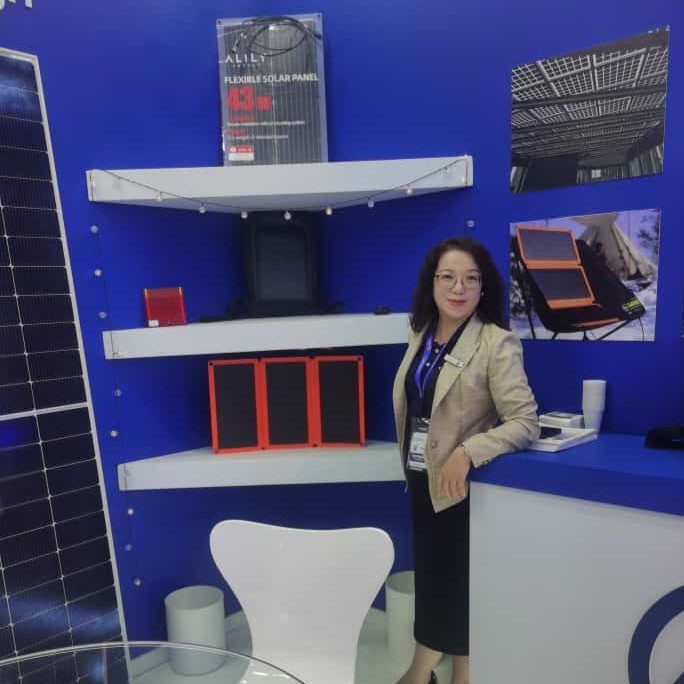
Lily Li is a renewable energy professional and Founder & CEO of ALILY ENERGY GmbH with 20+ years of experience in the photovoltaic industry. Her experience includes PV manufacturing, solar products, energy storage, supply chains, and international solar projects, with previous professional experience at JinkoSolar and Znshine. She is also a CEIBS Global EMBA 2020 alumna and writes about solar technology, manufacturing, renewable energy, and the global PV market.