 +86 150 0573 0099
  alily@alilyenergy.com
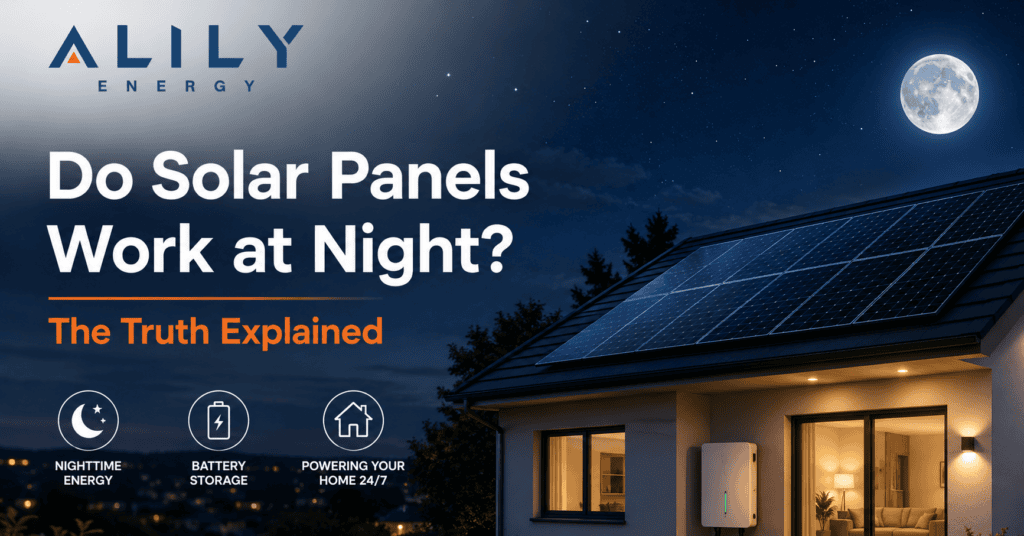
Do Solar Panels Work at Night? The Truth Explained (2026 Guide)
You might have even asked, “Do solar panels work at night?, you’re not alone. This is one of the questions that homeowners, businesses and those who own property are often asking themselves when switching to solar energy.
Short Answer: No, solar panels do not work at night because they need sunlight to produce electricity. Yet even without sunlight after sunset, homes and businesses with solar systems can have power through battery storage or purchasing electricity from the utility grid.
Some of the common misconceptions is do solar panels works and generate power 24 Hours a day.
In this Article we’re explains everything you need to know about do solar panels work at night, how solar systems provide electricity after dark, and what technologies make 24/7 solar-powered living possible.
Do Solar Panels Work at Night?
No, solar panels do not generate electricity at night. They need sunlight to activate their photovoltaic (PV) cells and produce power. Once the sun goes down, electricity generation stops.
That doesn’t mean your home has to go without power after sunset. A well-designed solar energy system can continue supplying electricity through:
- Solar battery storage
- Grid-connected net metering
- Hybrid solar systems that combine batteries with grid power
Key Takeaways
- Solar panels stop producing electricity after sunset.
- Homes can still use solar energy stored in batteries or draw electricity from the grid.
- Battery storage allows excess daytime energy to be used during the evening and overnight.
- Hybrid solar systems provide dependable power by switching between solar, batteries, and the utility grid.
- A properly designed system helps maximize energy savings, reliability, and long-term performance.
Why Don't Solar Panels Work at Night?
Solar panels generate electricity by converting sunlight into usable energy through photovoltaic (PV) cells. These cells require sunlight—specifically photons—to create an electrical current. Without sunlight, that process simply cannot take place.
As a result, conventional solar panels produce virtually no electricity at night.
How Does a Solar-Powered Home Get Electricity at Night?
One of the most common questions homeowners ask is, “If solar panels stop working after sunset, how does the house stay powered?”
The answer depends on the type of solar system installed.
1. Battery Energy Storage
During the day, your solar panels often generate more electricity than your home needs. Instead of wasting that excess energy, a battery storage system saves it for later use.
After sunset, the stored energy powers lights, appliances, electronics, and other household devices. Battery storage also provides backup power during grid outages, making your home more energy independent.
2. Grid-Tied Solar Systems
Many homes remain connected to the local electricity grid.
When your solar panels produce surplus electricity during the day, the excess power can be exported to the grid through net metering, depending on local utility policies. At night, when solar production stops, your home simply imports electricity from the grid to meet its energy needs.
3. Hybrid Solar Systems
Hybrid systems combine solar panels, battery storage, and the electricity grid into one intelligent setup.
These systems automatically switch between available energy sources, ensuring a reliable power supply while optimizing energy use throughout the day and night.
Do Solar Panels Charge Batteries at Night?
No.
Solar panels cannot charge batteries without sunlight. Battery charging only occurs during daylight hours when solar production exceeds your home’s electricity consumption.
At night, the battery supplies stored energy instead of recharging.
Can Solar Panels Generate Power from Moonlight?
Although moonlight is reflected sunlight, it is far too weak to produce meaningful electricity.
Standard commercial solar panels may detect tiny amounts of energy under bright moonlight, but the output is so minimal that it has no practical value for powering a home.
Do Solar Panels Work on Cloudy or Rainy Days?
Yes.
Solar panels continue generating electricity even when the weather is cloudy or rainy. While energy production is lower than on bright, sunny days, modern photovoltaic technology is designed to capture diffused sunlight efficiently and continue producing usable power.
Can You Run a House on Solar Power at Night?
Yes—provided your system includes adequate battery storage or another reliable backup power source.
A properly sized battery system stores excess electricity generated during the day and delivers it throughout the evening and overnight. The amount of power available depends on your battery capacity and your household’s energy consumption.
Benefits of Battery Storage with Solar Panels
Adding battery storage to a solar installation offers several advantages:
- Access to stored clean energy after sunset
- Reduced reliance on the utility grid
- Backup electricity during outages
- Better utilization of excess daytime generation
- Greater control over electricity costs
For homeowners and businesses exploring complete renewable energy solutions, learning about integrated solar planning from Alily Energy can be a valuable next step when evaluating long-term energy strategies and system design options.
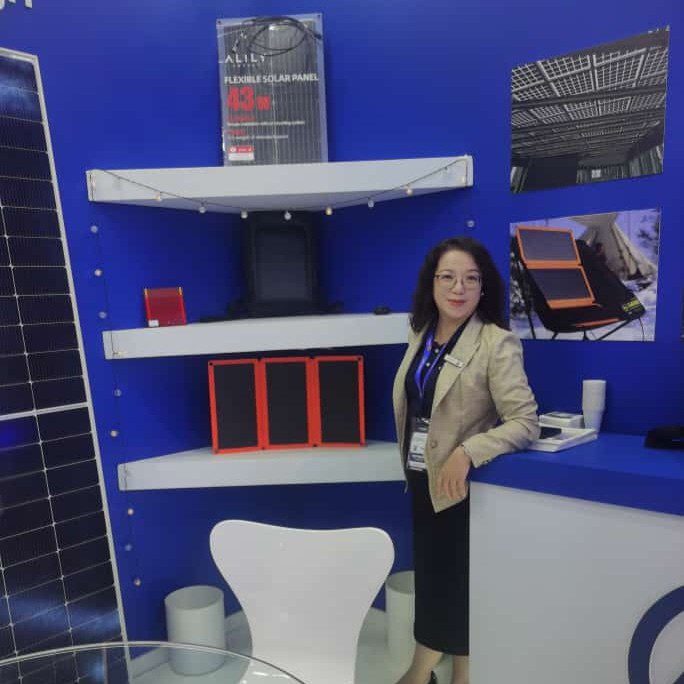
Lily Li is a renewable energy professional and Founder & CEO of ALILY ENERGY GmbH with 20+ years of experience in the photovoltaic industry. Her experience includes PV manufacturing, solar products, energy storage, supply chains, and international solar projects, with previous professional experience at JinkoSolar and Znshine. She is also a CEIBS Global EMBA 2020 alumna and writes about solar technology, manufacturing, renewable energy, and the global PV market.