 +86 150 0573 0099
 alily@alilyenergy.com


Solar energy has a bright future in India because the country receives abundant sunlight, has significant solar power potential, and is expanding its renewable energy capacity. Government initiatives, advances in solar technology, growing electricity demand, and the development of battery storage are creating more opportunities for solar energy across homes, agriculture, businesses, and industries.
India has made its name in the solar energy field by becoming a global leader in renewable energy adoption. As one of the most populated and developing countries in the world, India’s solar energy sector has experienced remarkable growth with the help of technological advancements and supportive government policies. The abundant sunlight and the environmental and economic benefits show that solar power is becoming the future of energy in India.
The progress is already visible. According to the Ministry of New and Renewable Energy (MNRE), India’s cumulative installed solar power capacity reached approximately 171.05 GW as of 30 September 2026. The government is also working towards its target of achieving 500 GW of installed electricity capacity from non-fossil fuel sources by 2030. These developments show why the solar energy future in India looks promising.
Why Do You Think That Solar Energy Has a Bright Future in India?
Several factors explain why solar energy has a bright future in India.
Plenty of Sunlight
One of the biggest reasons solar energy has a bright future in India is the country’s natural advantage—sunshine. India gets an average of 300 sunny days each year, which makes it one of the best places for solar power generation. When the place has this much sunlight available, it’s obvious that going solar is the best solution for the people of India.
According to the Ministry of New and Renewable Energy, about 5,000 trillion kWh of solar energy falls on India’s land area every year. Most parts of the country receive around 4–7 kWh of solar energy per square metre per day. The National Institute of Solar Energy has also estimated India’s solar potential at approximately 748 GW, based on a specific land-coverage assumption.
This natural advantage gives India considerable scope to develop solar power projects across different regions. Rajasthan, Gujarat, Maharashtra, Madhya Pradesh and other sunny regions offer opportunities for utility-scale solar farms, while rooftops in cities and towns can support smaller installations.
Solar power is not limited to large projects. Homes, factories, offices, schools, hospitals and agricultural facilities can also use suitable solar systems to generate electricity.
Source: MNRE — Solar Overview.
Solar Technology
Different manufacturers bring innovations in solar technology to improve the efficiency and affordability of solar panels. These developments are helping make solar energy more practical for residential, commercial and industrial applications.
Some important technologies include:
- TOPCon Solar Cells: These cells have a special layer that captures more sunlight to enhance their energy conversion efficiency.
- Bifacial Panels: These panels are capable of absorbing sunlight from both sides. They can increase energy output by up to 30% under suitable conditions, depending on factors such as ground reflectivity, installation height, and system design. This feature makes them suitable for various installations, including rooftops and floating solar farms.
- Perovskite solar cells (PSCs): combined with silicon cells in tandem designs have the potential to achieve solar conversion efficiencies of around 30% or higher under suitable conditions. Their lightweight structure and potential for improved low-light performance may offer additional benefits, while manufacturing costs, durability, and real-world performance continue to be areas of research.
- Integration of Smart Technologies: The adoption of artificial intelligence (AI) and the Internet of Things (IoT) in solar energy systems helps in real-time monitoring of the overall system and energy production and its usage. This integration helps in predictive maintenance and reduces downtime.
As these technologies develop, solar systems can become more efficient and better suited to India’s diverse energy needs.
Government Support
The government of India also pays attention to going green as a country, as they implement various initiatives to promote solar energy adoption in the country.
Some important initiatives are:
- National Solar Mission: Launched in 2010, the Jawaharlal Nehru National Solar Mission helped establish the policy foundation for the expansion of solar energy in India.
- PM Surya Ghar: Muft Bijli Yojana: Launched in 2024, this scheme aims to support rooftop solar installations in one crore residential households, subject to the scheme’s terms and eligibility requirements. Eligible households can receive central financial assistance for approved residential rooftop solar systems.
- PM-KUSUM: This scheme supports solar energy applications in agriculture, including eligible solar-powered agricultural pumps and decentralised solar power projects.
- Renewable Energy Expansion: India’s national energy plans include a target of 500 GW of installed non-fossil fuel electricity capacity by 2030. Solar power is expected to play a major role in achieving this goal.
Government support can make solar energy more accessible, encourage investment and increase adoption across households, businesses and rural communities. However, subsidy amounts and eligibility depend on the applicable scheme guidelines.
For current scheme details, visit the PM Surya Ghar official portal and the Ministry of New and Renewable Energy.
Solar Power: Financial Benefits
Although going green seems expensive initially because of buying the whole system, it can save money over time. The actual savings depend on the system’s cost, electricity consumption, local tariffs, sunlight availability and maintenance requirements.
Here is how solar energy can offer financial benefits:
- Reduced electricity bills: Solar panels generate electricity from sunlight, reducing the amount of electricity a household or business needs to purchase from the grid.
- Government assistance: Eligible residential consumers may receive financial assistance under applicable government schemes, helping reduce the upfront cost of rooftop solar installation.
- Long-term use: Solar panels are designed for long service lives, often around 25 years or more, depending on the product and its performance warranty. Regular inspection and maintenance help keep the system operating properly.
- Exporting surplus electricity: Under applicable net-metering or other approved arrangements, eligible grid-connected systems may receive billing credits or compensation for surplus electricity exported to the grid. The rules vary by state and electricity-distribution company.
- Lower exposure to electricity-price increases: Generating part of their own electricity can help households and businesses reduce their dependence on purchased grid power.
Solar panels do not automatically eliminate electricity bills or guarantee a financial return. A properly sized system, realistic savings estimates and an understanding of local regulations are important before investing.
It is also worth remembering that ordinary grid-connected solar systems generally shut down during a grid outage for safety reasons. To keep selected appliances running during a power cut, a suitably designed hybrid or off-grid system with compatible battery storage and backup capability may be needed.
Job Creation and India’s Energy Independence
The growth of solar energy creates opportunities across several parts of the economy. These include solar-cell and module manufacturing, equipment production, project development, installation, electrical engineering, maintenance and system monitoring.
India’s expanding solar manufacturing sector also creates opportunities for businesses involved in solar modules, inverters, mounting structures, batteries and other components. Investment in domestic manufacturing can strengthen supply chains and support the development of technical skills.
Solar energy can also help India reduce its dependence on imported fossil fuels. Generating more electricity from domestic renewable resources can improve energy security and reduce exposure to international fuel-price fluctuations.
India’s growing solar energy sector is creating new employment opportunities in solar panel manufacturing, installation, and maintenance. According to the IRENA Renewable Energy and Jobs Annual Review, India’s solar PV sector supported an estimated 304,340 jobs in 2024, with an additional 80,600 jobs linked to off-grid solar. Looking ahead, a CEEW and NRDC study estimates that achieving India’s clean energy targets could generate more than 4.4 million full-time-equivalent jobs by 2030 across multiple clean energy sectors. The expansion of solar energy can help develop technical skills, create employment opportunities, and support India’s transition towards a more sustainable economy.
Solar Energy Environmental Benefits
Solar energy is clean and renewable compared to other energy sources like coal and gas, which cause pollution and harm the environment. This is a perfect blend of environmental and economic benefit-generating energy sources.
Its main environmental benefits include:
- Zero Emissions: Solar power generation does not release toxic gases like carbon dioxide. It reduces air pollution and contributes to a healthier environment.
- Reduced dependence on fossil fuels: You don’t need to use and destroy the limited fossil fuels like coal, oil, and gas.
- Support for climate goals: Solar power can contribute to India’s efforts to reduce the emissions intensity of its economy and expand non-fossil electricity capacity.
- Conserve natural resources: In solar energy, the source is sunlight, which is an abundant and renewable resource.
- Flexible installation options: Rooftop systems can use existing building space, while carefully planned ground-mounted projects can be developed in suitable locations.
Solar panels still require raw materials, manufacturing, transportation and responsible end-of-life management. Good project planning and recycling practices are therefore important to maximise their overall environmental benefits.
Things India Should Address to Get More Benefits from Solar Energy
Solar Energy has benefited India in many ways, but there are still some challenges for which they must find solutions. Alily Energy has mentioned them here.
Land Requirements
Large-scale solar farms need substantial areas of land, which can create challenges in densely populated regions or areas where land is needed for agriculture and other purposes.
One possible approach is to use suitable rooftops, industrial buildings, parking areas and other developed spaces for solar installations. Floating solar projects may also be appropriate at selected water bodies, provided their environmental and technical impacts are properly assessed.
Using existing structures where practical can help reduce competition for land. However, every project requires careful evaluation of site conditions, costs, environmental considerations and grid connectivity.
For suitable applications, solar panels for different installations can help households and businesses make better use of available space.
Night-Time Energy Needs
Solar panels generate electricity when sunlight is available, so solar power production decreases in the evening and stops at night. Clouds and seasonal changes can also affect generation.
Battery energy storage systems can store surplus electricity produced during the day and supply it later when required. For larger projects, storage can also help manage changes in renewable energy generation and support the electricity grid.
The right solution depends on the application. A household may need a smaller battery system for essential appliances, while a commercial facility or utility-scale project may require a larger battery energy storage system (BESS).
Alily Energy offers solar-related solutions, including inverters and battery products, for different system requirements. System compatibility, battery capacity, safety and the expected backup duration should always be considered before selecting equipment.
Initial Installation Cost
Although solar technology has become more accessible, installing a solar power system still requires an upfront investment. The total cost depends on system capacity, panel quality, inverter selection, mounting structures, installation work and, where needed, battery storage.
With continued government support and the growing use of solar energy solutions, India’s solar sector is well positioned for further growth in the coming years.
If the Indian nation and government use these solutions, solar energy will continue to grow in India.
Solar Energy Future in India: What Lies Ahead?
The solar energy future in India depends on more than abundant sunlight. It also depends on continued investment, effective government policies, reliable infrastructure and the ability to make solar power useful for households, agriculture, businesses and large industries.
Recent capacity additions show the scale of this development. According to MNRE’s official statistics, India had approximately 171.05 GW of installed solar power capacity as of 30 September 2026. The country is also working towards the broader target of 500 GW of installed non-fossil fuel electricity capacity by 2030.
Several developments will shape the next phase of growth:
Better solar technology: Improvements in cell design, monitoring and system integration can help improve performance and reliability.
Residential rooftop solar: More households can generate electricity on their own rooftops and reduce their reliance on grid purchases.
Commercial and industrial solar: Factories, warehouses, offices and other facilities can explore solar installations to manage electricity costs.
Domestic solar manufacturing: Investment in solar modules, cells, inverters and manufacturing equipment can strengthen India’s supply chain.
Battery storage: Energy storage can help balance solar generation with electricity demand and support backup requirements where suitable.
The transition will not happen without challenges. Land availability, project financing, grid connections, storage costs and equipment quality all require attention. Nevertheless, India’s solar resources and ongoing capacity expansion provide a strong foundation for continued development. Source: MNRE — Physical Progress and MNRE — Year-wise Achievements
How Alily Energy Supports Solar Energy Development
Investing in solar energy requires careful consideration of product quality, system design and long-term performance. Choosing suitable solar modules, inverters, mounting equipment and battery storage can make a difference to the reliability of a solar installation.
With over 20 years of experience in solar solutions manufacturing and worldwide supply, Alily Energy serves customers across 100 countries. The company offers solar panels, inverters, battery energy storage systems (BESS), and other solar products for residential, commercial, and industrial applications. Its expertise also includes Building-Integrated Photovoltaics (BIPV) and solar manufacturing solutions, supporting businesses worldwide with reliable products and equipment for their solar energy requirements.
For residential, commercial and industrial buyers, the right solution depends on electricity demand, installation conditions, project capacity and budget. Businesses planning solar projects or manufacturing operations should assess equipment specifications, compatibility, quality requirements and supplier experience before making a decision.
Explore Alily Energy’s solar solutions to learn more about the products and capabilities available for different solar requirements.
Conclusion
So, why do you think that solar energy has a bright future in India?
India has abundant sunlight, significant solar potential, growing electricity demand and government initiatives that support renewable energy adoption. Advances in solar technology, domestic manufacturing, rooftop installations and battery storage are creating further opportunities for the sector.
Challenges such as land requirements, installation costs, energy storage and grid infrastructure still need attention. With sensible planning, reliable equipment and continued investment, solar energy can play an important role in India’s energy security and environmental goals.
The solar energy future in India is promising because the country has both the natural resources and the opportunity to expand their use. The next step is to turn that potential into reliable, affordable and well-planned solar power for homes, businesses and industries.
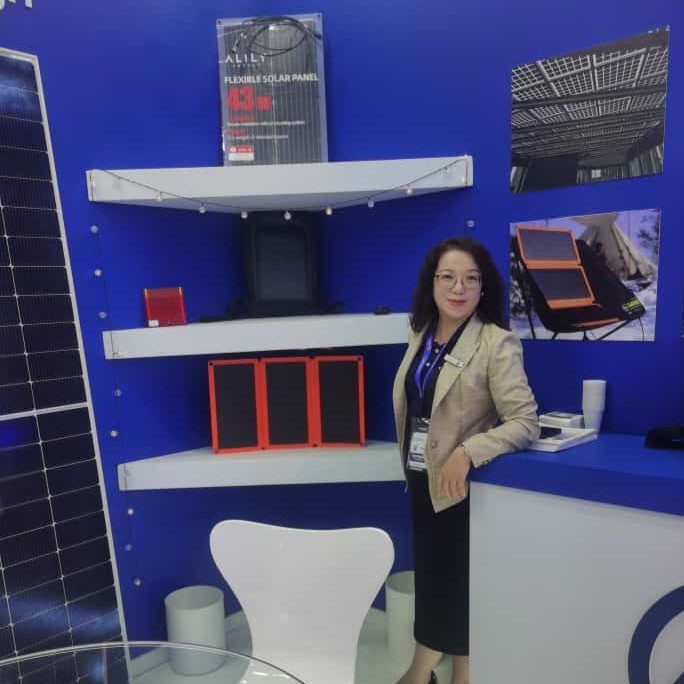
Lily Li is a renewable energy professional and Founder & CEO of ALILY ENERGY GmbH with 20+ years of experience in the photovoltaic industry. Her experience includes PV manufacturing, solar products, energy storage, supply chains, and international solar projects, with previous professional experience at JinkoSolar and Znshine. She is also a CEIBS Global EMBA 2020 alumna and writes about solar technology, manufacturing, renewable energy, and the global PV market.